Home care · Personal Digital Twin
A home that cares for the people you love.
E‑Terna recognizes what changes, reads it in context and alerts the right people when it matters. No cameras. No constant surveillance. Home stays home.
When living alone
becomes a worry.
Independence is precious. But distance can turn every silence into a question: “Is she okay?” E‑Terna was born in the space between independence and closeness.
Independence
“I want to keep living in my own home, my own way.”
Distance
“The people who love me can’t always be here.”
Peace of mind
“Knowing everything is fine shouldn’t mean keeping watch.”

There when it’s needed.
Nearly invisible when it’s not.
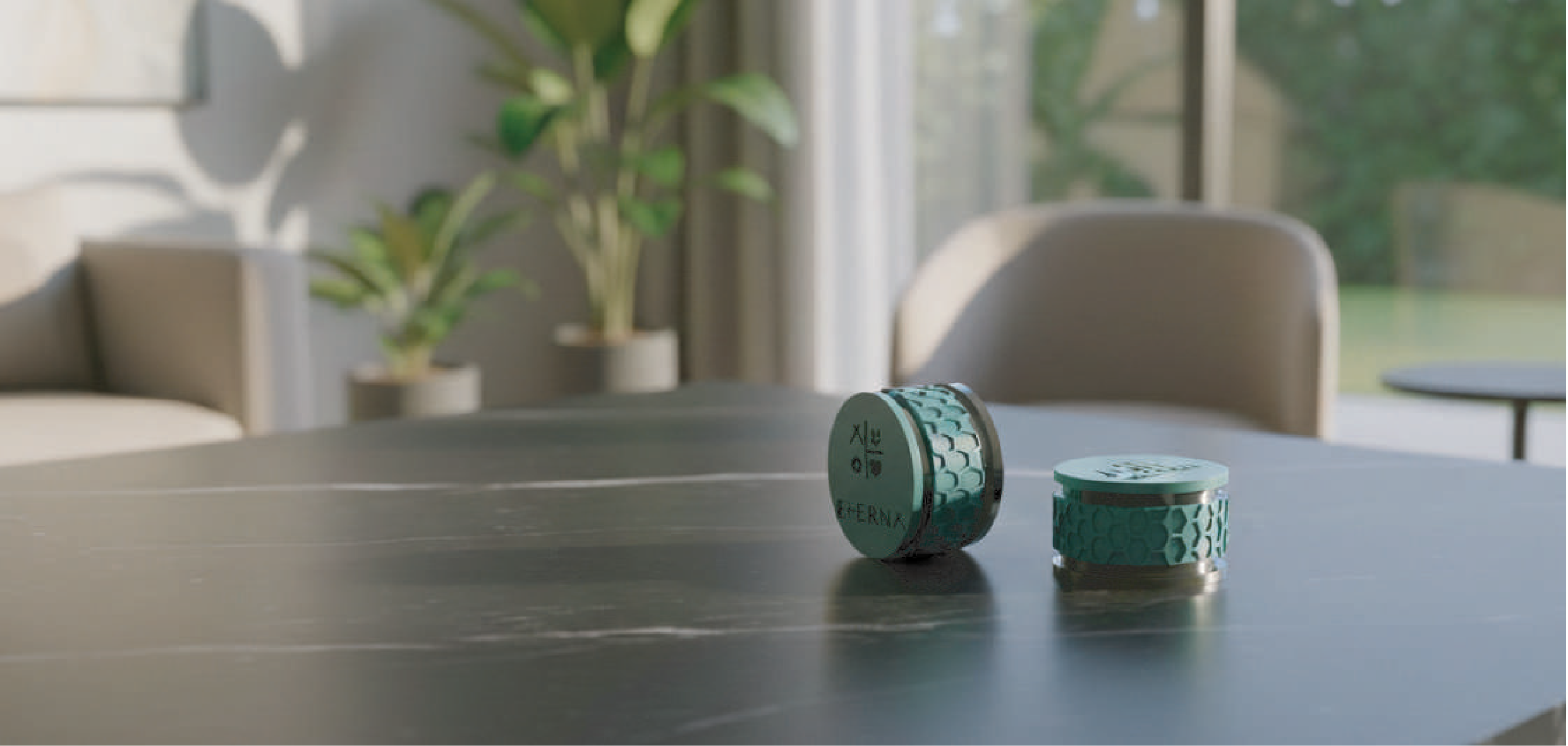
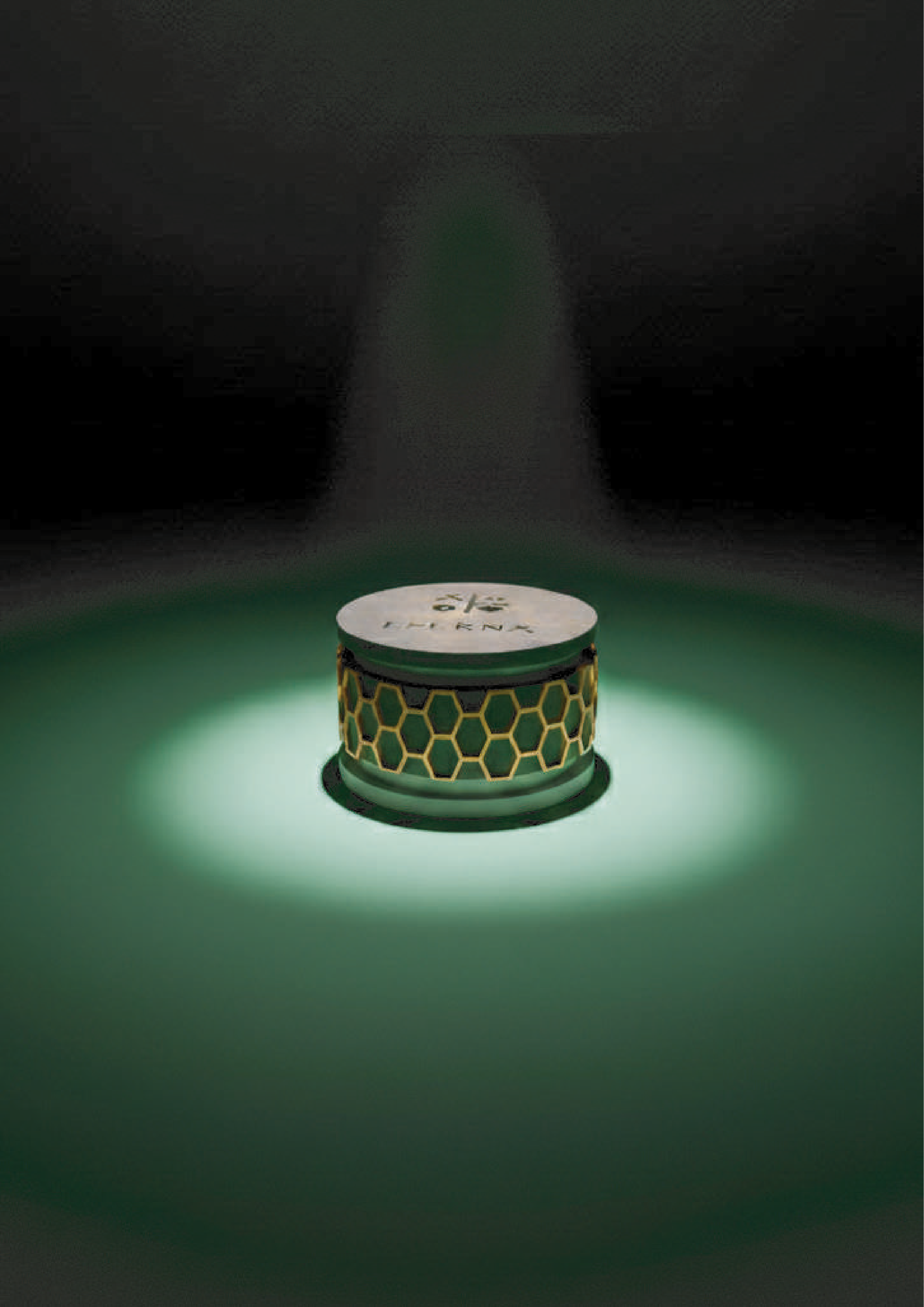
The Tondino is the physical touchpoint of the experience: compact and discreet, designed to fit into a home without turning it into a clinical setting.
Installation
Self-install, no construction work
Connectivity
NFC · BLE · Wi‑Fi · LoRaWAN planned
Battery life
Up to 6–7 months in the hardware concept
Interaction
Discreet signals and an assisted channel
Materials research
- Bioceramic with wood ash
- Biopolymer from coffee grounds
- Recycled aluminum
Mineral, tactile finishes designed to sit naturally alongside the wood, ceramics and fabrics of a home.

Specifications refer to the current hardware concept. Design renders.
To understand what changes,
you first need to know what’s normal.
The Digital Twin does not record home life: it is a dynamic reference for the person that helps interpret changes against their history and context. Try both scenarios.
Maria’s home · Digital Twin
All quiet at home
- 07:45Wake-upWithin normal range
- 08:15Reminder completedWithin normal range
- 09:30Moving around the houseWithin normal range
- 12:30LunchWithin normal range
Normal is the most important data point.
Timing, movement, rest and routine define what is normal for that person. No action required: the family simply sees that the day is consistent with the usual profile.
Demo data · no real person
- 01
Lives
The person goes about daily life as usual.
Sensors and device
- 02
Observes
The system picks up the expected signals.
Local processing
- 03
Changes
A deviation from the usual pattern emerges.
Pattern recognition
- 04
Understands
The change is read in the person’s context.
Digital Twin · explainable AI
- 05
Connects
When needed, it alerts the right person.
Human oversight
One person.
Many people who care for them.
E‑Terna envisions distinct views, governed by role and responsibility. Choose a role to see what it receives.
Family and caregivers
Children, relatives, home care aides
- Daily summary
- Alerts only when something needs attention
- Reminders and support
- Quick contact
Maria’s home · family view
DemoAll quiet at home
The morning routine is consistent with the usual profile. No action required.
- Wake-up
- 07:45
- Movement
- Normal
- Reminder
- Done
Illustrative interface

Peace of mind isn’t knowing everything. It’s knowing when to be there.
Protecting someone doesn’t mean
watching everything.
For a product that enters the home, privacy and dignity are part of the design. A home is not a hospital room.
No cameras
No continuous video feed underpins the experience.
No constant listening
The home never becomes a space that is always listened to.
Local first
What can stay close to the person is processed there.
Human oversight
Permissions, roles and decisions remain governed.
Trust is an architecture
- 01PersonDignity, consent, control
- 02HomeData minimization and local processing
- 03EdgeProcessing close to the source
- 04E‑TernaGovernance, audit, interoperability
- 05Care networkAccess by role and responsibility
Regulatory and technical frameworks the project aligns with; not certifications obtained.
Accessible by design
- VisionHigh contrast, simple interactions.
- HearingVisual and text cues where audio isn’t enough.
- CognitionPlain language, few steps, no alarmism.
- IndependenceDiscreet technology that supports independent living.
Evidence and impact
Measuring what we promise. Distinguishing what we know.
| Indicator | Value | Type of data | Reported source |
|---|---|---|---|
| Emergency detection time | < 2 seconds | Target from internal testing | E‑Terna internal tests / Milesight VS373 |
| Unassisted falls | up to −40% | External benchmark | QuietCare / PSNet AHRQ |
| Avoidable hospitalizations | −15% / −40% | Benchmark range | JMIR 2024 / EU CareTech models |
| False positives | −93% | External benchmark | MDPI / FallDeFi |
| Family-perceived sense of safety | +40% | External benchmark | Osservatorio Smart Welfare (Italian smart-welfare observatory) |
Figures drawn from the benchmarks and sources in the project materials. Before any commercial or clinical use, each figure must be verified and classified by level of evidence.
Aging at home shouldn’t mean being alone.
E‑Terna doesn’t replace care. It helps care arrive at the right moment. The project is currently in the concept and product development phase.